%2016_26_48.png)
%20(1350%20x%201080%20px)_edited_jp.jpg)
ARTLO at Art Madrid 2026: A Measured Space for Discovery Within Madrid’s Art Week

Published on 12 May 2026

Held from 4 to 8 March in the Galería de Cristal of the Palacio de Cibeles, Art Madrid returned for its 21st edition, reaffirming its position within Madrid’s increasingly complex Art Week.
While the city continues to expand as a network of fairs, exhibitions and parallel initiatives, Art Madrid occupies a distinct and carefully balanced role— neither defined by the scale of the international market nor by the radical experimentation of alternative formats, but by a sustained commitment to accessibility, plurality and direct engagement.
This year’s edition brought together 35 galleries and more than 200 artists, offering a broad overview of contemporary practice across painting, sculpture, installation, photography and hybrid media. Rather than adhering to a single curatorial thesis, the fair maintained an intentionally open structure, allowing diverse artistic languages and positions to coexist. The result was not a unified narrative, but a layered environment in which different generations and approaches could be encountered without rigid hierarchies.
At the centre of this edition was a clear shift towards experience. The Parallel Programme functioned as a conceptual and physical extension of the fair, activating the space through performances, curated routes and site- specific projects. Under the overarching framework of inhabiting the ephemeral, the fair proposed a reading of its own architecture as a relational system—one in which corridors, distances and transitions became part of the artistic experience itself. Viewing was no longer a passive act, but a process shaped by movement, attention and personal interpretation.
This emphasis on spatial awareness and perception was reinforced by the idea of “imaginary distances”, a notion that moved beyond the physical separation between artwork and viewer to encompass subjective experience:
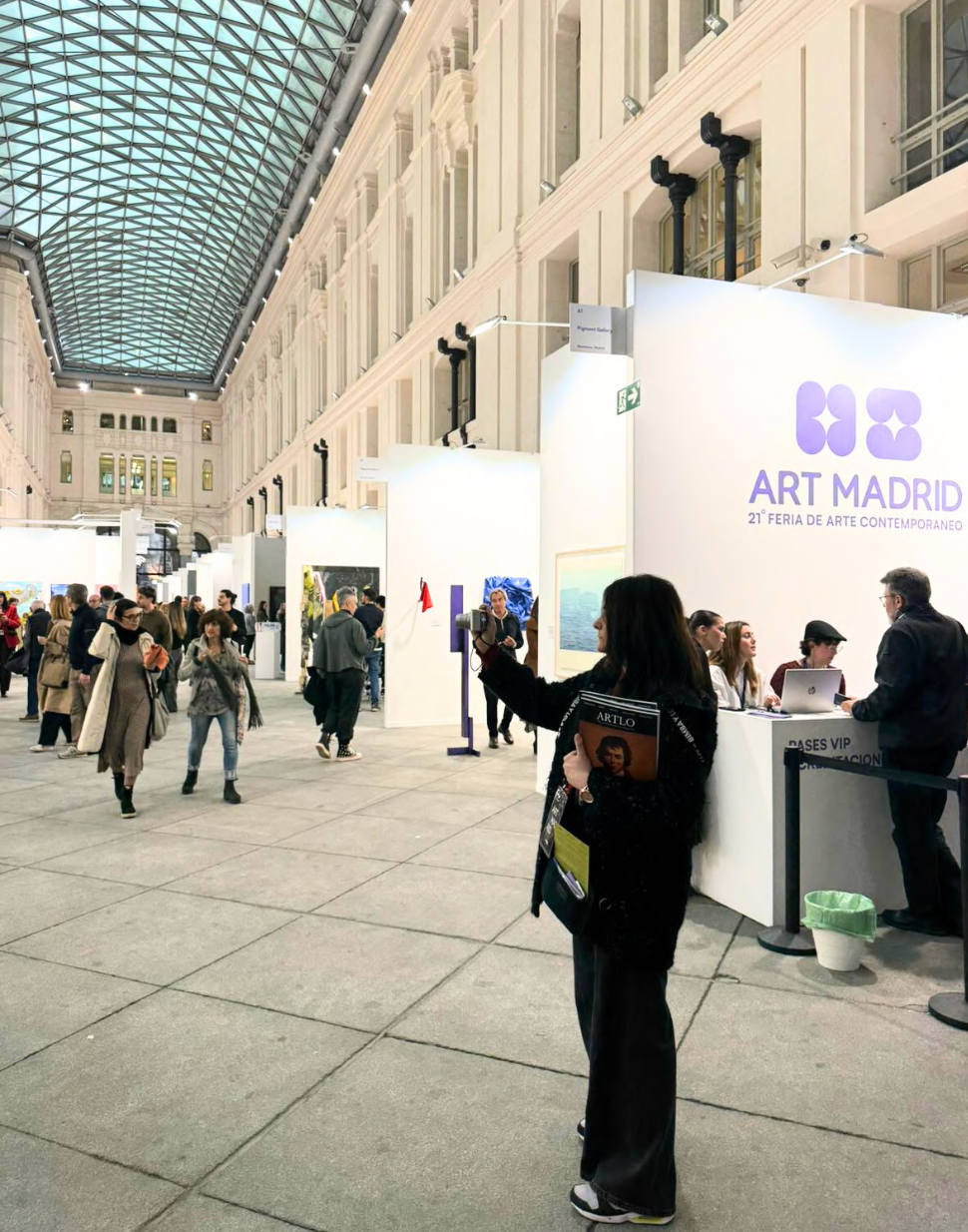
the time spent, the paths chosen and the individual connections formed. In this sense, the fair subtly redefined its role—not simply as a marketplace, but as a space of constructed meaning.
One of the most significant contributions to this direction was the Open Booth programme, dedicated to presenting an artist without gallery representation. In its third edition, the project featured a large-scale installation that transformed the booth
into an environment built from urban remnants and industrial materials.
Rather than presenting discrete objects, the work operated as an ecosystem in tension, inviting visitors to move through and physically engage with the space. This approach reinforced the fair’s ongoing interest in supporting emerging practices while challenging conventional modes of display.
Alongside this, the fair continued to strengthen its mediation between artists and collectors. Initiatives such as One Shot Collectors introduced a more guided approach to acquisition, offering tailored advice and encouraging a more informed and reflective engagement with collecting. This was complemented by the Patronage Programme, which expanded its network of awards and acquisitions, involving private collections and corporate partners in the direct support of artists. These mechanisms, while embedded in the market structure, pointed towards a more sustained and relational model of support.
The performance cycle further extended the fair’s temporal dimension. Daily activations transformed the exhibition space into a stage where the body became both medium and archive, engaging with questions of memory, labour and presence. These interventions disrupted the rhythm of the fair, introducing moments of intensity that contrasted with the more static experience of viewing artworks.
Curated routes, developed by art historians, offered additional layers of interpretation. Rather than guiding visitors through a fixed narrative, these itineraries proposed frameworks for reading the works—addressing themes such as visibility and aesthetic language
—while encouraging a more attentive and contextualised experience.
Within this structure, the selection of galleries played a crucial role in defining the tone of the edition.
The balance between emerging and established artists created a dynamic in which discovery remained central. Several presentations demonstrated strong engagement from collectors, with notable sales and institutional acquisitions reinforcing the relevance of the fair within the Spanish context.

Open Booth 2026 and the Expansion of the Fair Format

As part of the Parallel Programme, the third edition of Open Booth was presented as a platform dedicated to artistic creation and contemporary experimentation. The initiative focuses on artists who are not yet represented by galleries, offering a professional context of high visibility in which emerging practices can unfold, engage with audiences and consolidate their position within the current art landscape.
This year’s edition featured Cuban artist Daniel Barrio (b. 1988), who presented the site-specific installation Despiece. Protocolo de mutación.
Barrio’s practice centres on painting as a space of experimentation through which he examines the commodification of the social sphere and the dynamics of mediated approval. Drawing on imagery sourced from the press and other media, he intervenes pictorially to disrupt and reconfigure their original meaning. Through this process, his work proposes alternative readings while questioning the mechanisms through which meaning is constructed, positioning painting as a space for reflection, tension and release.
Despiece. Protocolo de mutación is constructed from urban remnants, industrial materials and fragments of history, prompting a reflection on the memories we inherit, consume and construct. Floor, walls and volumes come together to form a landscape in tension, where the sacred coexists with the everyday, and where fractures hold more significance than resolution.
In this context, Art Madrid continues to expand the boundaries of the traditional fair format, reinforcing its role as a space for dialogue between artists, institutions and audiences, while opening new avenues of visibility for emerging practices.
Collecting, Patronage and Performance
Alongside its exhibition programme, Art Madrid 2026 further strengthened its mediation between artists and collectors through initiatives designed to encourage more reflective forms of collecting.
One Shot Collectors introduced guided approaches to acquisition, offering tailored advice and encouraging visitors to engage with collecting through a more informed and contextualised perspective. This was complemented by the Patronage Programme, which expanded its network of awards and acquisitions through collaborations with private collections and corporate partners.
While these initiatives remain embedded within the commercial structure of the fair, they also point towards more sustained and relational models of support for contemporary artists.
The fair’s performance cycle further extended its temporal dimension. Daily activations transformed the exhibition space into a site of movement and presence, where the body itself functioned as medium, archive and gesture. These interventions disrupted the rhythm of the fair, introducing moments of intensity that contrasted with the relative stillness of conventional viewing.
Curated routes developed by art historians added further interpretative layers. Rather than guiding visitors through a fixed narrative, these itineraries proposed thematic frameworks through which to approach the works, addressing questions of visibility, material language and aesthetic perception.
Together, these elements contributed to a fair experience that prioritised attentiveness, context and encounter.
ARTLO’s Selected Highlights from Art Madrid 2026
The following selection gathers a number of galleries and artists whose presentations stood out within Art Madrid 2026 for their material presence, conceptual coherence and distinctive visual language. Rather than attempting to provide a comprehensive overview of the fair, this selection reflects a more focused reading of practices that sustained a particularly meaningful dialogue with the viewer.
Collage Habana

Based in Havana, Collage Habana has, since 2004, played a central role in the promotion and circulation of Cuban visual arts within the framework of the Fondo Cubano de Bienes Culturales. Through a network of galleries with distinct profiles, the programme brings together artists at different stages of their careers, from emerging practitioners to nationally recognised figures. Its exhibitions and initiatives reflect the breadth and diversity of contemporary Cuban artistic production, offering a dynamic and evolving perspective on the scene.
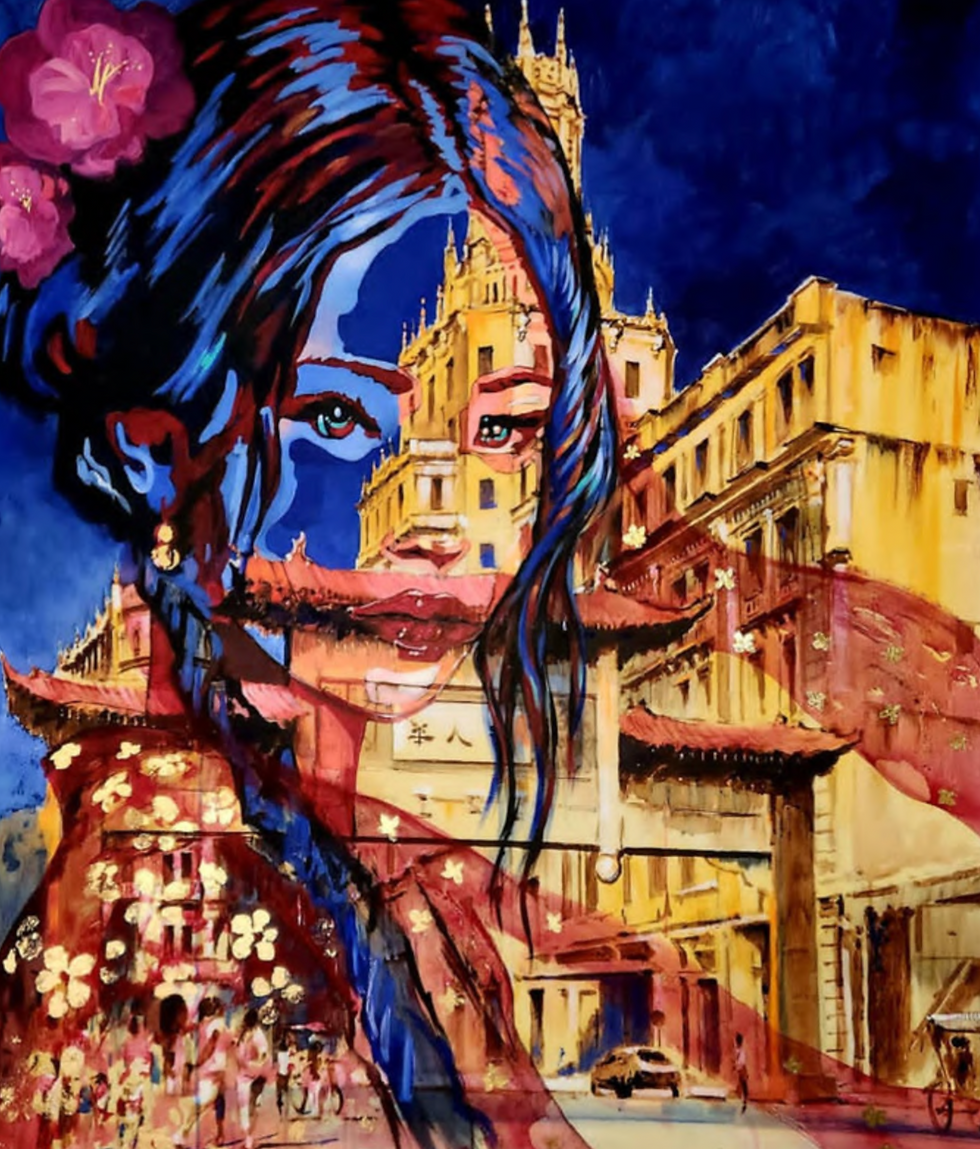
Daniela Águila.
aniel Aguila’s practice introduces a new direction within his work while maintaining a recognisable visual language. In the series “Invisible Portraits”, he turns his attention to the representation of Black female figures, presenting them with a quiet yet commanding presence. These compositions suggest layered narratives that unfold subtly, inviting the viewer to engage with questions of identity, memory and cultural inheritance. Through this body of work, Aguila opens a space for reflection on voices that often remain unheard, constructing a visual discourse that is both personal and expansive.
Lavio and Gemma Alpuente

Founded in 2012 in Shanghai and now operating between Shanghai and Murcia, Lavio works in close collaboration with galleries, foundations, artist estates and institutions to present works of museum-quality standard. Through an international network, the platform supports exhibitions, collections and cultural initiatives, positioning itself at the intersection of advisory, curation and global art circulation.
Gemma Alpuente’s practice is grounded in a multidisciplinary approach that combines material exploration with conceptual inquiry. Her work moves fluidly across techniques and formats, developing a personal visual language shaped by ongoing research. With an established presence in international circuits, her work has entered collections across Europe and Asia, while recent recognition—including national awards—has reinforced her position within the contemporary scene.
Nuno Sacramento Gallery and Mario Valdés
Established in 2003 in Aveiro, Portugal, Nuno Sacramento Gallery has developed a consistent programme dedicated to contemporary practices across multiple disciplines, including painting, sculpture, photography, installation and video. Alongside its exhibition activity, the gallery reinforces its curatorial discourse through publications and critical texts, situating its artists within a broader intellectual and cultural framework.
Mario Valdés
Mario Valdés’s work investigates the relationship between the human condition and its surrounding environment through sculptural compositions that combine glass, photographic imagery and carbonised organic materials. His practice unfolds through a dialogue between transparency and solidity, creating intimate spatial atmospheres. These works suggest a quiet reflection on environmental fragility and the psychological dimensions of contemporary life.

Banditrazos Gallery and Kim Han-Ki
Since its founding in 2007, Banditrazos Gallery has positioned itself as a platform for cross-cultural exchange, connecting South Korea with artistic practices from Latin America and Spain. Through curated exhibitions and institutional collaborations, the gallery operates as a bridge between different cultural contexts, presenting a wide range of artistic approaches while fostering dialogue between audiences and international contemporary art.
Kim Han-Ki
With a background in semiconductor engineering and academic research, Kim Han-Ki develops a practice that merges art, science and technology. His work translates complex systems— ranging from artificial intelligence to quantum mechanics—into dense visual compositions that remain deeply human in tone. Through layered symbols, equations and cultural references, he reflects on obsolescence, digital memory and the emotional impact of technological life, inviting a reconsideration of what is often overlooked or discarded.

Devesa Acquisition Award — Art Madrid 2026
At Art Madrid 2026, Kim Han-Ki was awarded the Devesa Acquisition Award, a distinction that involves the direct acquisition of a selected work into a private collection. Unlike symbolic recognitions, this award reflects a tangible commitment from the sphere of contemporary collecting. Presented within the context of the fair, the award highlights practices that resonate not only conceptually, but also within the evolving landscape of collectors. In this case, it acknowledges a body of work that engages with technological thought while maintaining a strong human dimension.
Inéditad Gallery
Founded by curator and cultural manager Luis López Almarcha, Inéditad Gallery centres its programme on the idea of art as a vehicle for social transformation. The gallery places particular emphasis on giving visibility to artists whose work expands perspectives and foregrounds alternative narratives and identities. Its selection reflects a clear commitment to practices that engage critically with the present, encouraging both emotional response and intellectual reflection.
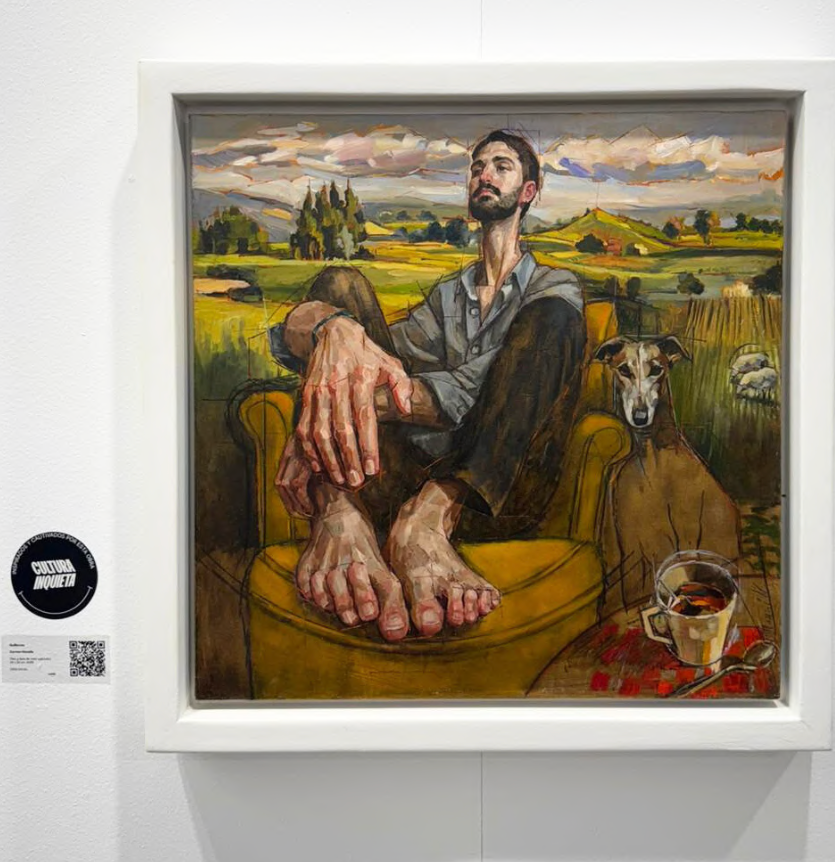
Carmen Mansilla
Born in Madrid in 1962, Carmen Mansilla trained in Design and Illustration at the Escuela Superior de Diseño ESSED. Her early interest in the classical human figure led her to further develop her practice in Florence, as well as through workshops with internationally recognised artists such as José Sánchez Carralero, Antonio López, Alex Kanevsky and Vicente Desiderio.
Her work has been presented in both solo and group exhibitions at a national and international level, and she has been part of initiatives such as Women Painting Women in the United States. Her paintings are held in public and private collections, including the MEAM Museum in Barcelona and the Museo del Dibujo Castillo de Larres, as well as collections across Europe and the United States.
Mansilla’s figures deliberately move away from prevailing trends and conventional standards of beauty, instead proposing a more introspective and timeless approach to the human form. For Art Madrid 2026, she presented a new body of work developed specifically for this edition.
Pigment Gallery
Founded in Barcelona in 2016, Pigment Gallery takes its name from the very substance that gives colour to painting —an origin that reflects its core focus on materiality and artistic expression. The gallery is dedicated to the promotion of contemporary art, presenting a programme that spans from modern figuration to pure abstraction.
With a strong commitment to supporting both local and international artists, Pigment Gallery actively participates in major art fairs across Europe, the United States and Asia. Its approach is grounded in a desire to move beyond trends and conventional narratives, seeking instead to identify new voices and perspectives within the contemporary scene.
Through its exhibitions and projects, the gallery fosters dialogue and critical engagement, positioning itself not only as a space for display, but as a platform for exchange and reflection.
Irene Ortiz
Born in Barcelona in 1970, Irene Ortiz is a textile artist whose practice centres on hand weaving, approached through an intuitive and experimental process. Working outside predefined structures or conventional patterns, she explores the expressive potential of textile as a medium in itself.
Each piece emerges through an open and evolving process, where colour, texture and composition develop organically. Her work is guided both by the inherent qualities of the materials and by their transformation over time, resulting in compositions that feel at once tactile, fluid and deeply connected to process.

Overview of the Fair
Art Madrid 2026 reaffirmed its position within Madrid’s Art Week as a carefully balanced and accessible fair, bringing together a diverse selection of galleries and more than 200 artists. Painting and sculpture maintained a strong presence, supported by installation, photography and hybrid media, creating an open framework in which different artistic languages could coexist without rigid hierarchies. The fair’s structure, complemented by its Parallel Programme, encouraged a more experiential approach, where movement, perception and individual interpretation became central to the visitor’s engagement.
At the same time, one absence became noticeable. While textile art has been steadily gaining recognition and visibility within the contemporary art scene, its presence at the fair remained limited. This was particularly striking given the strong response it generated—textile works were among the first to be acquired, reflecting a clear interest from collectors. A broader representation of textile practices would have further enriched the dialogue of the fair.
Even so, the overall quality and diversity of the presentations reinforced Art Madrid’s role as a space for discovery, where emerging and established voices meet within a dynamic and evolving contemporary landscape.
Selected views from Art Madrid 2026. Photo: © ARTLO Magazine


