%2016_26_48.png)
%20(1350%20x%201080%20px)_edited_jp.jpg)
Old Master Portrait Looted by Nazis Found in Argentinian Property Listing

Published on 18 September 2025
The rediscovery of Portrait of the Countess Colleoni by the Italian painter Fra’ Galgario (Giuseppe Vittore Ghislandi) is one of those cases that demonstrates how the history of art can unexpectedly collide with the everyday present. The painting, long believed lost as a result of the systematic looting carried out during the Second World War, resurfaced not through an auction catalogue, a museum exhibition or a scholarly bequest, but in photographs taken for the sale of a house in Mar del Plata, a coastal city south of Buenos Aires in Argentina.

In those photographs, intended merely to present a villa with velvet sofas, lace doilies and the predictable decorative objects of a provincial middle-class interior, the unmistakable image of the Countess Colleoni appeared hanging on the wall. For specialists used to studying blurred archival photographs and catalogue entries, the recognition was immediate: the composition, the palette and the dimensions matched exactly what was known of the missing canvas. The episode illustrates with unusual clarity the unpredictable itineraries of looted artworks, the fragility of cultural memory, and the persistence of traces that resurface decades later in the most banal of contexts. The painting had belonged to the collection of Jacques Goudstikker, a celebrated Dutch dealer who, before the war, had assembled one of the largest private galleries in Europe, with more than a thousand works ranging from Italian Renaissance panels to Dutch Golden Age masters and eighteenth-century portraits such as Fra’ Galgario’s. When the Nazis occupied the Netherlands in 1940, Goudstikker’s gallery became a prime target for confiscation. Goudstikker himself fled with his family, but died in a tragic accident during the journey, leaving his widow Desi to face the devastating consequences. His inventory was forcibly sold, and a large part of it was absorbed into the personal collection of Hermann Göring, who systematically built a private empire of art on the suffering of others. For decades, the Goudstikker family fought to recover parts of the collection, and their case became a landmark in the history of restitution. Among the works that disappeared during the occupation was Fra’ Galgario’s portrait, which was remembered only through early black-and-white photographs and notes in catalogues. Its absence was typical of hundreds of works whose physical presence had been effaced but whose memory lingered in archives. The trail of the painting after its removal from Amsterdam leads to Friedrich Kadgien, an SS officer and senior administrator in the Reich’s economic apparatus. Kadgien was one of many bureaucrats who profited from the confiscation of Jewish property, and as the war drew to its inevitable conclusion he fled first to Switzerland and then to Argentina, carrying with him not only jewels and money but at least two paintings, one of them Galgario’s portrait of the Countess. The trajectory is consistent with that of numerous Nazis who sought refuge in South America after 1945, carrying cultural property across the Atlantic and integrating it into discreet domestic contexts far from the eyes of European investigators. Kadgien’s life in Argentina remained quiet, but subsequent testimonies and documents confirm that he was part of that larger movement of looted property which travelled thousands of kilometres from the European war to the relative anonymity of the southern hemisphere. The fact that the painting remained in a private house in Mar del Plata for decades explains why it escaped the radar of institutions and scholars. Unlike works that entered public collections, those absorbed into family inheritances could remain hidden for generations, appearing occasionally in the background of photographs but never formally identified until chance intervened. The property listing in which the portrait was detected is a good example of how digital technology has transformed the work of provenance research: images circulate online with unprecedented speed, and recognition can occur not only in museums or libraries but in the most unexpected digital environments. When art historians noticed the Countess Colleoni above the sofa, they compared the image with existing archival records: the pose of the sitter, the tonal balance, the dimensions of the canvas as recorded in catalogues, and the subtle characteristics of Fra’ Galgario’s brushwork. All elements aligned, leaving little doubt about the identification. The discovery triggered immediate official action, but by the time investigators reached the property the painting had already been removed, probably alerted by the sudden visibility of the house online. This disappearance caused alarm, since many similar cases have ended in works vanishing once again into the grey zones of the art market. Objects present in family collections can be transferred quickly, hidden in new locations, or even sold through intermediaries. However, in this case the story took a more positive turn: after several tense days, the portrait reappeared in official custody, ensuring that its eighty-year journey had finally reached a point of visibility from which it could no longer retreat. The irony of its re-emergence is obvious: a painting by Fra’ Galgario, whose portraits are valued for their restraint, psychological depth and ability to communicate dignity without excess, had been reduced to mere background decoration in a set of real estate photographs, an image intended to sell a house rather than to reveal a cultural treasure. To understand the significance of this rediscovery, one must consider the broader history of Nazi looting. Between 1933 and 1945, hundreds of thousands of artworks were confiscated from Jewish families, collectors, dealers and museums.
The scale of appropriation was unprecedented, and it was driven not only by greed but also by ideology: the Nazis sought to annihilate communities and to reshape cultural identity by appropriating or destroying their heritage. Göring’s collection alone amounted to more than a thousand paintings, assembled through coerced sales, confiscations and forced transfers. Other officials, such as Alfred Rosenberg and his Einsatzstab Reichsleiter Rosenberg (ERR), organised systematic seizures across occupied Europe. Many works entered German state museums; others were absorbed into private collections; thousands disappeared into hiding. The case of Goudstikker is emblematic because his gallery was dismantled so thoroughly and because his heirs fought so persistently for restitution. After the war, Desi Goudstikker and later her son Edo pursued legal and moral claims, but the process was slow and complicated by post-war politics. For decades the Netherlands resisted large-scale restitutions, and it was only after sustained international pressure and new principles established in the late 1990s—such as the Washington Conference Principles on Nazi-Confiscated Art—that significant progress was made.

In 2006 the Dutch government returned more than 200 works to the Goudstikker heirs, one of the largest restitutions in Europe. That precedent changed the landscape for similar claims. Each restitution is more than the return of property: it represents the recognition of injustice and the reconstruction of historical truth. The reappearance of the Countess Colleoni portrait now extends this narrative, adding one more piece to the puzzle. It reminds us that looted art often survives not in museums but in private contexts, invisible to the public until chance intervenes. The South American dimension of the story is also important. Argentina, along with other countries such as Brazil and Chile, became a refuge for many Nazis after 1945. Some carried with them not only money and identities but also cultural objects, which entered local economies in discreet ways. Villas in Mar del Plata, neighbourhoods in Buenos Aires and provincial estates occasionally contained paintings, sculptures and decorative arts of European origin with uncertain provenance. Most remained unknown to the wider world. The Colleoni portrait illustrates how these objects could survive for decades without detection, until an incidental photograph broke the silence. In terms of art history, the painting itself deserves renewed attention. Fra’ Galgario, born in Bergamo in 1655 and active until his death in 1743, cultivated a style of portraiture distinct from the theatrical exuberance of Venetian contemporaries. His sitters are characterised by sobriety, clarity and a refined attention to individuality. He avoided excessive ornament and instead concentrated on conveying presence through subtle gestures, nuanced expressions and carefully modulated tones. The Portrait of the Countess Colleoni exemplifies this approach: the sitter’s poise is calm but authoritative, her individuality expressed without ostentation. The portrait is not only evidence of a crime but also a significant work of art in its own right, part of a corpus that situates Fra’ Galgario among the most notable Italian portraitists of his time. The rediscovery also raises questions about the responsibilities of museums, governments and the art market today. How should works identified in private houses be handled? What mechanisms ensure that heirs are recognised and that restitution is implemented effectively? The case intersects with international frameworks such as the 1970 UNESCO Convention on cultural property and the 1998 Washington Principles, but it also exposes the gaps that persist. Many works looted during the war remain missing; others are in museums where provenance has not been fully investigated; still others circulate quietly in private hands. The fact that a major portrait could surface in an online real estate listing demonstrates both the fragility of our control over cultural memory and the possibility of its recovery.
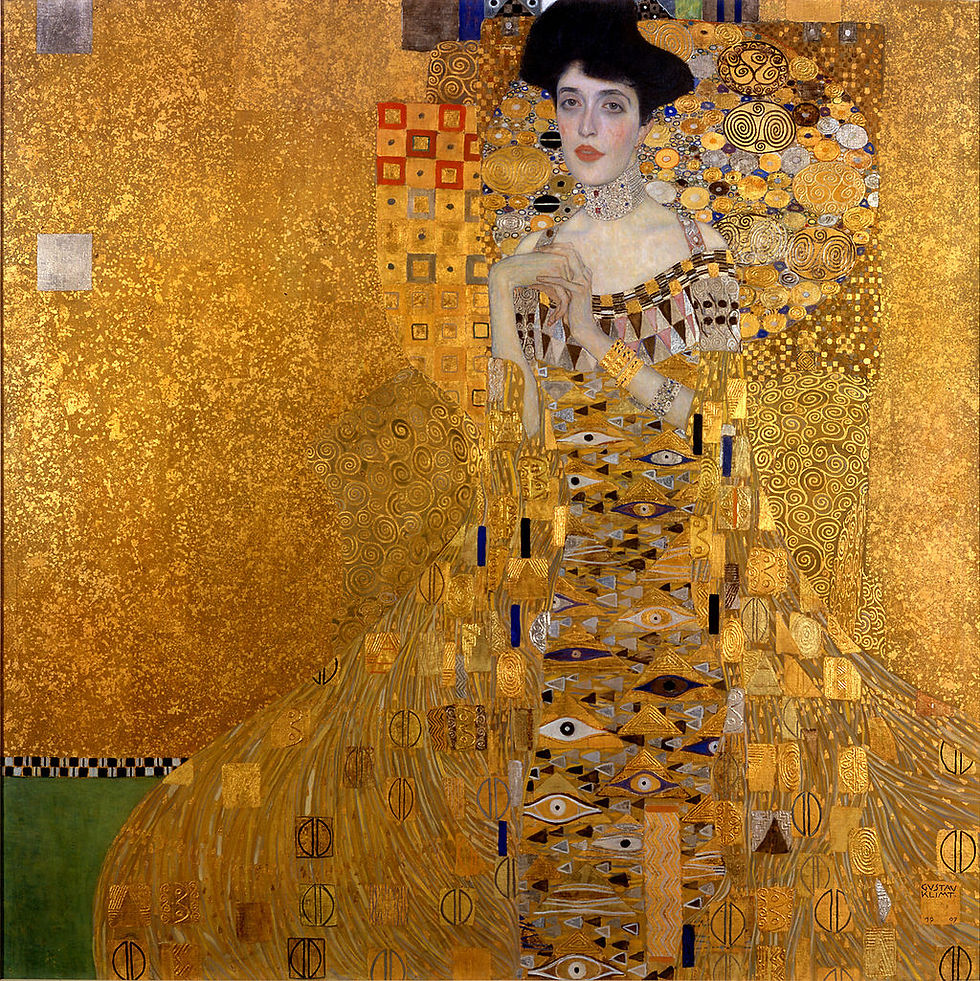
To situate the Colleoni portrait among comparable cases, one can recall the restitution of Gustav Klimt’s Portrait of Adele Bloch-Bauer I to Maria Altmann in 2006 after a long legal battle in the United States, or the return of works by Lucas Cranach, Vermeer and others to heirs across Europe. Each case has contributed to a broader awareness of provenance research as an essential field. Museums now routinely investigate the ownership history of works, and many publish databases of works with gaps between 1933 and 1945. Scholars cross-reference catalogues, photographs and archives to reconstruct the paths of objects. Yet despite this progress, many mysteries remain. The reappearance of Fra’ Galgario’s portrait therefore acts as both a success story and a reminder of unfinished work. To follow the journey of this painting is to confront the entangled histories of art and power. The Nazis did not merely plunder; they attempted to reconfigure cultural identity according to their ideology. The survival of works like the Countess Colleoni, and their eventual return to visibility, testifies to the resilience of art against such attempts. Paintings endure, carrying with them the traces of injustice but also the possibility of restitution and renewal. In this sense the banal photograph of a house for sale becomes a document of historical importance, because it revealed what decades of archives could not: the continued existence of a missing work. From Amsterdam to Mar del Plata, from the hands of a Nazi bureaucrat to the digital page of a property website, the portrait has traversed improbable spaces and emerged once more into public awareness. Its rediscovery is a reminder that the work of justice in art history is not complete, and that every object that resurfaces brings with it the obligation to restore memory as well as possession. The Portrait of the Countess Colleoni thus enters not only the catalogue of Fra’ Galgario but also the charged terrain of restitution, where art, law and history converge.
The implications of the Colleoni portrait’s rediscovery extend beyond the single case and open the door to a wider discussion about how the global art world has dealt with the legacy of wartime plunder, a discussion that involves not only legal frameworks but also the responsibilities of scholars, curators, collectors and governments. The story of the Countess Colleoni begins in eighteenth-century Bergamo, where Fra’ Galgario developed his career within a local tradition of portraiture that responded both to Venetian influence and to the sober civic identity of Lombardy. The Colleoni family itself carried considerable symbolic weight: descendants of Bartolomeo Colleoni, the famous condottiere whose equestrian statue in Venice is one of the landmarks of Italian Renaissance sculpture, the family remained associated with prestige, military leadership and civic patronage. For a painter like Ghislandi, whose clientele consisted largely of aristocratic families, a commission to portray a Colleoni was not only an artistic opportunity but also a confirmation of his role in visualising local power structures. The painting thus connects the eighteenth-century politics of representation with the twentieth-century politics of looting and restitution, because what was once a marker of lineage and social dignity became a displaced object in the machinery of Nazi cultural expropriation. The modern process of identifying such works relies on a network of databases and international cooperation. The Art Loss Register, the Lost Art Database in Germany, the Netherlands Art Property Collection and various museum-based initiatives all function as repositories of information where images, descriptions and provenance details are cross-referenced. In the case of the Colleoni portrait, specialists compared the real-estate photograph with records preserved in Dutch archives and wartime inventories, confirming the match. This type of research has become increasingly important as digital technologies facilitate rapid comparison, but it also requires trained connoisseurship: subtle distinctions in brushwork, the texture of canvas or the particular way an artist handles light can be decisive. Museums across Europe and North America have been forced to confront the gaps in their own holdings. In France, the category known as “Musées Nationaux Récupération” includes more than two thousand works recovered after the war but never restituted, pending the identification of rightful heirs. In the United States, the National Gallery of Art and the Museum of Modern Art have both undertaken provenance research projects to clarify ownership histories. In Germany, major museums have dedicated departments to investigate works with problematic origins. Spain, although less central in the Nazi art trade, has also been scrutinised; in 2013 the Thyssen-Bornemisza Museum faced legal claims regarding Camille Pissarro’s Rue Saint-Honoré, après-midi, effet de pluie, which had been looted from a Jewish family in France. Although Spanish courts rejected the claim, the case highlighted the ongoing tensions between legal statutes of limitation and moral responsibility. These examples show that the Colleoni case is part of a wider unresolved field, where law, ethics and history intersect. The question of what to do when heirs cannot be identified is particularly pressing: should such works remain in public museums, should they be sold to create funds for Holocaust remembrance, or should they be preserved in special collections dedicated to looted art? Each option has defenders and critics, and the debate is far from closed. The Colleoni portrait, because it was identified in a private house, also raises the issue of how states deal with objects that emerge outside the institutional framework. When a looted work is in a museum, the pressure of public opinion can accelerate restitution, but when it is in private hands the process often depends on negotiation, mediation and sometimes litigation. Argentina, where the painting was found, has not historically been at the forefront of restitution debates, but its role as a post-war refuge for former Nazis and their families makes such discoveries particularly sensitive. For art historians, the Colleoni portrait also offers an opportunity to reassess Fra’ Galgario’s place within the broader panorama of European portraiture. While in Venice contemporaries such as Sebastiano Ricci pursued decorative exuberance, and in Rome painters like Pompeo Batoni created portraits that combined grandeur with cosmopolitan flair, Galgario cultivated a quieter idiom. His figures are often set against neutral backgrounds, their gestures controlled, their costumes rendered with accuracy but without theatrical excess. The Countess Colleoni embodies this approach: her authority is established not through ostentation but through measured presence. In the context of restitution, this subtlety becomes almost symbolic: a work that resists exaggeration but acquires immense historical resonance through its journey. Scholars have noted that Galgario’s portraits are relatively rare outside Italy, which makes the presence of the Countess Colleoni in a Dutch collection all the more significant. It indicates the breadth of Goudstikker’s interests and his role in circulating Italian art in northern Europe. The war interrupted that circuit violently, and the subsequent dispersal of works across continents disrupted scholarly understanding. Each rediscovery, therefore, is not only a moral act but also a contribution to art history, restoring missing links in the map of artistic exchange. The mechanisms of restitution today are shaped by a combination of international conventions and national policies. The 1970 UNESCO Convention established principles against illicit trafficking, but it did not directly address Nazi-looted art. The Washington Principles of 1998, signed by 44 countries, were more specific, urging governments and museums to identify works, to publicise them, and to seek “just and fair solutions.” However, these principles are non-binding, which means that implementation varies greatly. Some countries, like the Netherlands after the Goudstikker case, have established restitution committees with relatively generous standards, while others apply stricter legal criteria that make recovery difficult. The Colleoni portrait’s path into official custody will test how such frameworks function in practice when a work re-emerges in South America rather than in Europe. The heirs of Goudstikker, who have already recovered more than two hundred works, are likely to pursue claims, and the process will involve negotiations between Argentina, the Netherlands and possibly international mediators. Such cases are rarely swift, but the public visibility generated by the Mar del Plata photographs ensures that this painting cannot simply vanish again into obscurity. What is striking about the Colleoni rediscovery is how it encapsulates the collision of past and present. On one hand, it evokes the darkest aspects of twentieth-century history: the systematic expropriation of Jewish property, the bureaucratic machinery of Nazi cultural policy, the displacement of objects across continents. On the other, it reflects twenty-first-century realities: the ubiquity of online images, the capacity of scholars to mobilise digital tools, and the heightened awareness of provenance issues in a globalised art market. The photograph of a living room intended to sell a property thus becomes a historical document, bridging the domestic banalities of everyday life with the weight of unresolved injustice. For many readers, this juxtaposition is what makes the story compelling: the idea that a cultural treasure, thought irretrievably lost, can suddenly appear not through the deliberate labour of scholars but through the accidental gaze of an estate agent’s camera.
The final significance of the Colleoni portrait’s rediscovery lies in how it brings together questions of history, law, morality and art into a single visible object. Other comparable episodes illustrate the same tensions: in 2013 the Bavarian authorities uncovered more than a thousand works in the Munich apartment of Cornelius Gurlitt, the son of one of Hitler’s art dealers, and that cache included paintings by Chagall, Matisse and Otto Dix that had been considered missing for decades; in 2021 the Uffizi in Florence identified a still-life by Dutch painter Jan van Huysum that had been stolen during the war and displayed for years in a German family home before its return; in 2022 the Art Institute of Chicago restituted a work by Camille Pissarro to the descendants of a Jewish family, after years of negotiation. Each case shows how the boundaries between private interiors and public institutions blur when the past reasserts itself through objects. The Colleoni portrait, appearing on a real estate portal, is perhaps the purest example: the very tools of contemporary consumer culture, designed to sell domestic spaces, accidentally exposed the survival of a looted artwork and reactivated international memory. For museums and scholars, the lesson is clear: provenance research cannot be confined to institutional collections; it must also pay attention to private circulation, to auction catalogues, to online listings, and to the broader ecosystem in which artworks travel. The responsibilities of governments are equally clear. International cooperation is essential, since works can cross borders with ease, and disputes often involve multiple jurisdictions. Argentina’s role in this case will be watched closely, as it tests how a country outside the European theatre of war addresses claims arising from Nazi expropriations. For heirs, the rediscovery is part of an ongoing process that is as much about recognition as about material recovery. Each returned work acknowledges the injustice suffered by families, restores part of a cultural narrative, and demonstrates that history, however delayed, can still deliver forms of justice. For art history as a discipline, the Colleoni portrait restores a missing piece of Fra’ Galgario’s oeuvre. Scholars now have the opportunity to study the work directly, to analyse its technique, and to place it alongside other portraits preserved in Bergamo and Milan. This will not only refine our understanding of Galgario’s style but also shed light on the networks of collecting that connected Italian portraiture with Dutch dealers in the early twentieth century. The rediscovery enriches both scholarship and collective memory. Ultimately, what makes the story remarkable is the tension between the everyday and the extraordinary. A villa in Mar del Plata, photographed for sale, revealed a painting that had travelled through the great traumas of the twentieth century: confiscation under occupation, transfer to a Nazi official, displacement across oceans, decades of silence in private hands, and finally re-emergence in the age of digital images. That trajectory encapsulates the ways in which art becomes entangled with power and survival. It also underscores the resilience of cultural objects, which outlive regimes, wars and concealment, only to return when circumstances allow. The Portrait of the Countess Colleoni is now more than a portrait of an eighteenth-century aristocrat. It is a document of expropriation and restitution, a witness to historical injustice, and a reminder that art can never be fully absorbed into the darkness of history. Its rediscovery through a banal real estate advertisement is more than a curiosity: it is a symbol of how memory resurfaces when least expected. For specialists, it will become a reference point in discussions of provenance; for the heirs of Goudstikker, it represents another step in the recovery of a dispersed legacy; for the broader public, it is a compelling story of loss and survival. The work has moved from the silence of archives and the obscurity of a private living room into the visibility of scholarship and the possibility of restitution. It demonstrates that the work of confronting the past continues, that each object recovered is a fragment of justice achieved, and that cultural heritage, however long displaced, remains capable of re-entering the present. In the end, the Countess Colleoni looks back at us not only through the eyes painted by Fra’ Galgario but also through the layers of history inscribed in her journey: dignity captured by an artist in eighteenth-century Bergamo, confiscation under a regime that sought to erase whole communities, concealment in exile, and a final return to visibility through the casual lens of a property website. That unlikely trajectory transforms the painting into more than an artwork: it is now a testimony to survival, a challenge to oblivion, and a reminder that even in the most ordinary contexts the past remains embedded, waiting to be recognised.
